Ever have a feeling or see something so specific, so perfectly weird, that there’s just no word for it? That little gap in the language is your playground. Inventing a word is about more than just making up silly sounds; it’s about capturing a unique idea that no one else has managed to name yet.
It’s your chance to look at the world, find something that needs a label, and create it yourself.
Why Inventing a Word Is a Creative Superpower
Language isn't a finished product, locked away in a museum. It’s alive, messy, and growing all the time. Think of it like a massive bin of LEGOs. Sure, you can follow the instructions, but the real magic happens when you start snapping pieces together in new ways to build something straight from your imagination.
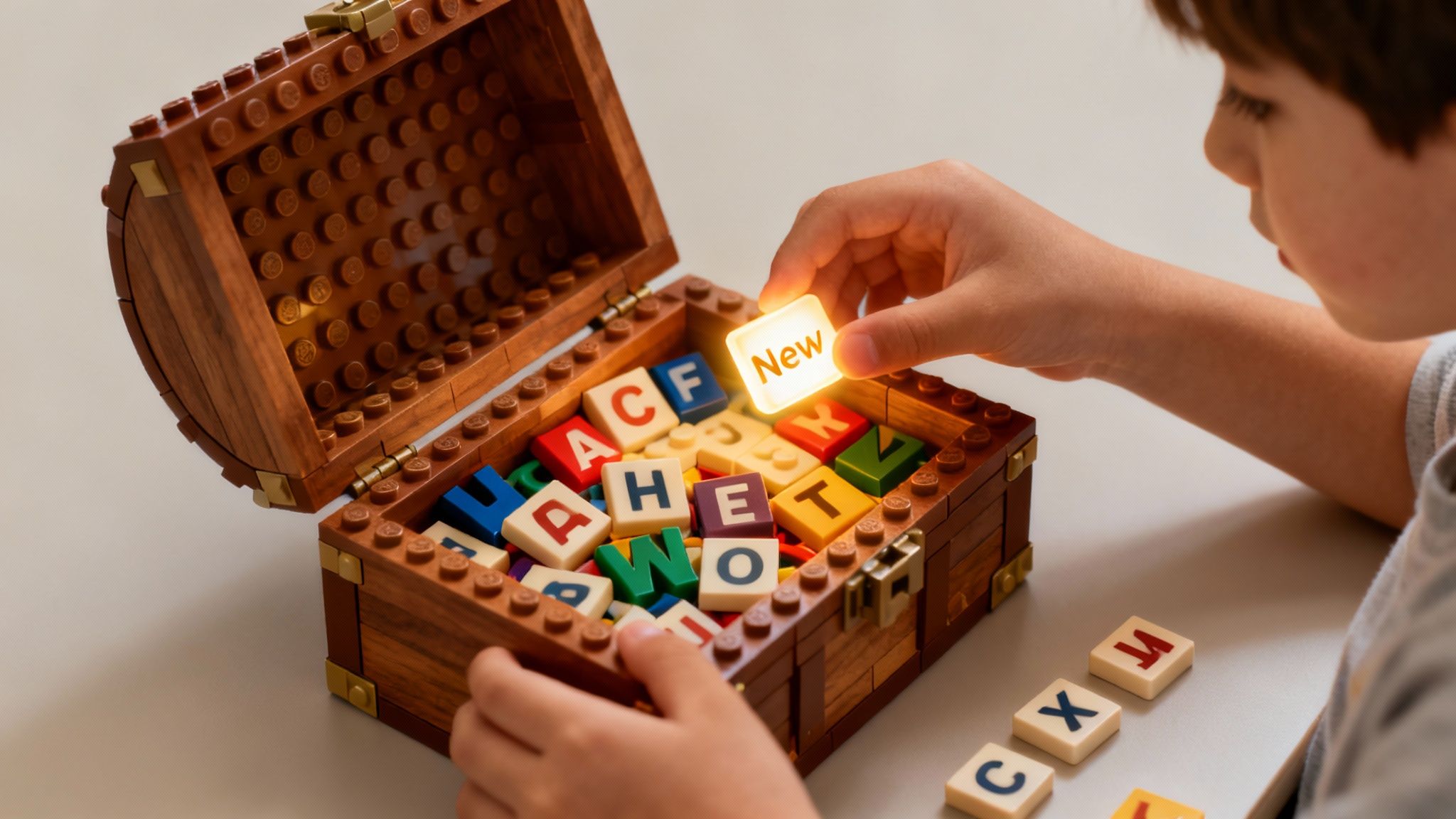
This isn’t just for fun, either. Famous writers have been doing this for centuries to make their stories and poems more vivid. When you create a word, you’re forced to think about how sounds feel and what meanings they carry. It’s a powerful way to sharpen your own voice and express yourself with pinpoint accuracy.
Welcome to the World of Neologisms
There's a fancy term for a brand-new word: a neologism (pronounced nee-OL-o-jism). It sounds a bit academic, but it simply means "new word." Every single word you know started its life as a neologism!
The English language is constantly evolving. Experts estimate that around 1,000 new words wiggle their way into common use every single year. Many pop up from slang, new tech, or are coined by writers and artists.
So, why should you get in on the action?
- It’s a creativity workout. You’re basically solving a language puzzle no one else has tackled.
- You can finally name that thing. You know, the one that no existing word quite captures.
- You add your voice to the world. Every new word is a tiny, unique contribution to our shared language.
This guide will walk you through how to start building your own personal dictionary, one awesome new word at a time.
Exploring the Sounds and Feelings of Words
Words aren't just letters on a page; they're packed with sounds and feelings that give them real power. Playing with the music of language is a huge part of inventing a word that feels just right. Have you ever noticed how some sounds make a word feel big and booming, while others make it seem tiny and sparkly?

Think about it: why does “flitter” sound so light and quick, while “trudge” sounds slow and heavy? It's because the sounds themselves carry meaning. This amazing connection between sound and meaning has a name: sound symbolism. And you can become a sound explorer just by listening closely. You can dive deeper into the history of linguistics and see how experts first discovered these patterns.
Become a Sound Explorer
The best way to get ideas for a new word is to pay attention to your senses. What does something sound like? What does it feel like? Try making noises that match different experiences.
- The fizz of a soda: How could you capture that bubbly, sharp sound in letters? A "z" or an "s" feels right, doesn't it?
- The hum of a happy cat: That's a soft, gentle sound. Letters like "m" and "n" often give off that same vibe.
- The feeling of warm sunshine: This one isn't a sound, but you can still invent a word for the feeling. Does it feel smooth like a glish or cozy like a wumph?
Your Turn: Think of sounds as your building blocks. Hard sounds like 'k' and 't' can make a word feel sharp or sudden. Softer sounds like 'l' and 'sh' can make it feel gentle and flowing. Try combining them! What word could you invent for the quiet tapping of rain on a window? Or for that comfy feeling of being wrapped in a warm blanket? Just close your eyes, listen to the world, and let the sounds inspire you.
Your Word-Building Toolkit: Three Fun Methods
So, you’re ready to start inventing words that stick? Excellent. Every great builder needs a toolkit, and yours is filled with three super fun and creative ways to create something totally new. Think of these as your secret recipes for cooking up brand-new words.
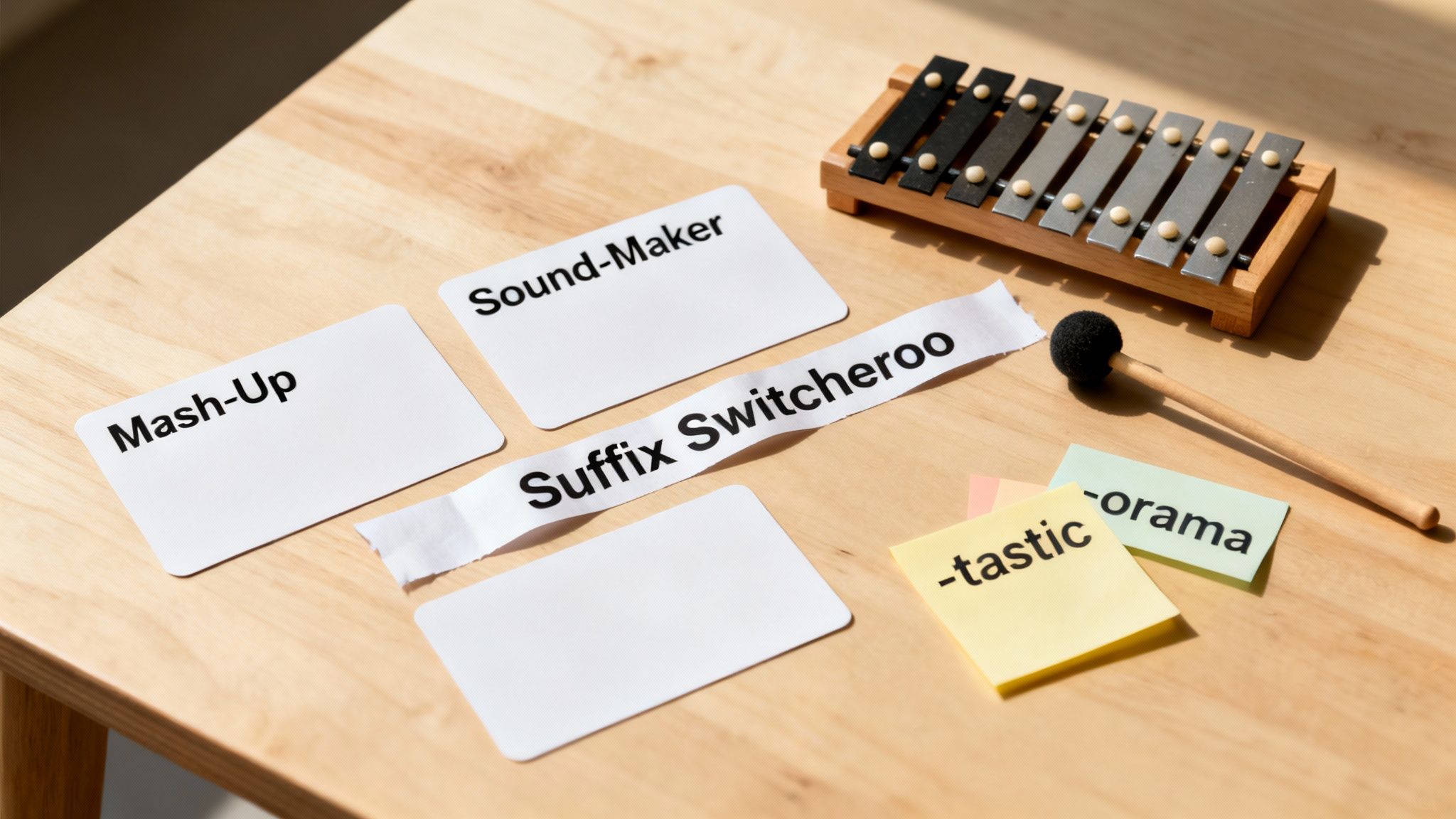
We're skipping the boring lists and jumping straight into playful techniques you can use right away. Each method is a different way to look at language, so you can pick the one that feels most fun for the idea you want to name.
Let's open that toolkit and see what’s inside.
The Mash-Up Method
First up is the Mash-Up, also known as a portmanteau. You take two existing words and blend them into one awesome new creation. You’ve definitely seen these around! "Smog" is a mash-up of smoke and fog, and "brunch" is a mix of breakfast and lunch. This technique is perfect when you need to describe something that feels like a combination of two different things.
- Try This: What could you call that feeling of being hungry and angry at the same time? A real word for this is "hangry"!
- Your Turn: What word could describe feeling both happy and sleepy at the same time? How about "slappy"?
Pro Tip: The Mash-Up is fantastic because its meaning is often easy to guess. Since it uses parts of words people already know, it gives listeners a clue about what your new word means right away.
The Sound-Maker Method
Next, we have the Sound-Maker, where you invent words that sound like the very thing they describe. The official term for this is onomatopoeia, and it’s one of the most playful ways to make up a word. Words like buzz, crash, and meow are all Sound-Makers because they imitate a real-world sound. This method is great because it connects your new word directly to a sound, making it instantly understandable and fun to say.
- Try This: Invent a word for the sound a jellybean makes when you squish it. How about "squelch" or "sploop"?
- Your Turn: What’s a good word for the quiet, crinkly sound of walking on dry leaves? Maybe a "crusfle"?
The Suffix Switcheroo
Finally, let's play with the Suffix Switcheroo. This method is all about adding fun and descriptive endings to words you already know to give them a completely new personality. A suffix is just a little word part you tack onto the end of a word, like adding "-ly" to make "quickly." For this game, though, we’re going to use silly or exaggerated suffixes to make our words more exciting.
- Add -tastic to something that’s even better than fantastic. A great movie becomes "movie-tastic."
- Use -orama for something that's huge and impressive. A giant ice cream sundae could be a "sundae-orama."
- Try -izzle for a cool, modern twist. That boring homework could become your "homework-izzle."
Your Turn: What would you call a super messy room using this method? Perhaps it’s a "disaster-ama"!
Each of these methods gives you a different way to start inventing a word from scratch. To make it even easier, here's a quick summary.
Three Fun Ways to Invent a Word
| Method Name | How It Works | Example Invented Word |
|---|---|---|
| The Mash-Up | Combine two existing words into one new word. | Slappy (sleepy + happy) |
| The Sound-Maker | Create a word that imitates a sound. | Crusfle (the sound of walking on dry leaves) |
| The Suffix Switcheroo | Add a fun ending to an existing word. | Disaster-ama (disaster + orama, for a very messy room) |
Now that you have these tools, you're all set to experiment. Pick your favorite method and give it a try—you might be surprised by the incredible words you come up with.
Bringing Your New Word to Life
So you’ve crafted the perfect sound and meaning. What’s next? A new word is just an idea until you give it a personality and send it out into the world. The best way to start is by creating its very own dictionary entry.
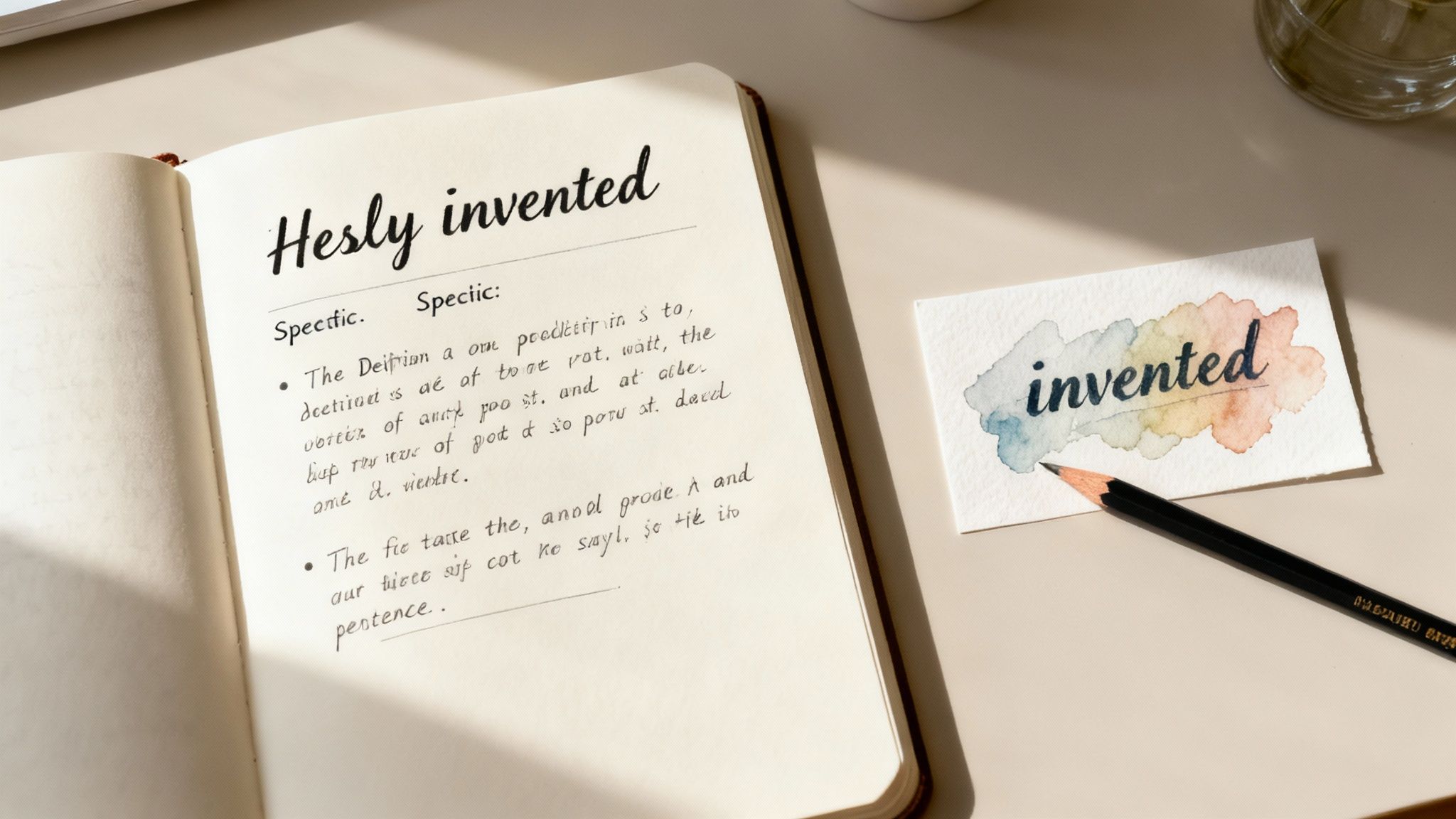
This simple act makes your idea feel solid and makes it easier for others to understand. You're not just making up a word; you're adding a new concept to the world, just like people have been doing for centuries. In fact, a new word is born in English about every 98 minutes, though only around 1,000 actually stick each year. Check out some more amazing language facts to see the huge, creative process you're now a part of.
Create a Word Profile
To make your word feel official, grab a notebook and give it a proper profile. This helps you think through all the important details, just like a real lexicographer would.
Here’s what to include in your word's "official" entry:
- Part of Speech: Is it a noun (a thing), a verb (an action), or an adjective (a description)? Nail this down first.
- The Definition: Write a simple, clear explanation of what your word means. What specific feeling, object, or idea does it capture?
- An Example Sentence: Now, put it in action! Write a sentence that uses your word correctly so everyone knows exactly how it works.
Your Turn: Try drawing what your word represents—whether it's a feeling, a creature, or a silly situation. A picture can bring your word to life in a way that text alone can't. This visual clue helps make the meaning instantly clear and memorable.
Share Your Creation
A word doesn't truly exist until someone else hears it. The real magic happens when you start using it with your friends and family.
Try to weave it into conversations or use it in a story you’re writing. You could even challenge your friends to use it, too. Imagine how a character from the Phillip Aisling series might use your word on one of their wild dream adventures.
The more you use it, the more real it becomes.
Word Invention Games for Home and School
Alright, let's turn inventing words into a game everyone can play! These activities are perfect for a creative classroom lesson or just a fun afternoon at home. They make language feel social, a little silly, and way more engaging.
Language has always grown through community. Early humans figured out sounds and gestures to communicate important things, like where to find food or warn others of danger. Over time, those sounds became standardized within their groups. You can dive deeper into how language evolves collectively on Wikipedia.
Definition Dare
This game puts your creativity on the spot. One person invents a brand-new word and says it out loud. Everyone else then has to guess what it means just based on how it sounds.
For example, if someone throws out the word “sploodle,” what comes to mind?
- A type of floppy, overcooked noodle?
- The act of spilling a puddle in a very specific way?
- That feeling of being silly and completely exhausted at the same time?
The person whose guess is closest to the inventor's real definition gets to invent the next word.
Collaborative Story Starters
This is a fantastic way to build a story together, one weird word at a time. The first person kicks things off with a single sentence that includes their newly minted word. Something like, "The tiny dragon felt a bit grizzle-grump this morning."
The next person has to add a sentence that builds on the story and uses their own new word. You just keep going around the circle, creating a unique and totally unpredictable tale.
These games are more than just a good time. They build kids’ confidence in their own creative expression and give them a hands-on feel for how words are actually put together. It’s a great way to connect word invention directly to creative writing in a fun, low-pressure setting.
Ready to give it a shot? Grab some friends or family and see what amazing new words you can bring into the world.
Frequently Asked Questions
Alright, you've learned the methods, played the games, and now your brain is probably buzzing with questions. That’s a fantastic sign! A curious mind is an inventor's best tool. Let's dig into some of the most common questions young wordsmiths have.
Can my new word get into the dictionary?
This is the big dream, isn't it? Getting your word into an actual dictionary is a huge accomplishment. While it's not easy, it's absolutely possible. Lexicographers (the people who make dictionaries) are like word detectives. They look for new words that have become a real part of how people talk and write. For a word to make the cut, lots of different people have to use it consistently over a pretty long time.
So, what's your best shot? Use your word often and get your friends and family to use it, too! The more it's out there in the world, the better its chances.
What if someone doesn’t understand my word?
Don't sweat it! This is actually a great moment. When someone doesn't get your word, it’s your chance to step up and be the teacher. You already did the hard work when you created a profile for your word. Now, you just get to share it.
Explain it with a bit of flair:
- State the definition clearly.
- Pop it into an example sentence to show how it works.
- If you drew a picture, show it to them!
Most people get a kick out of learning something new. When you explain your word, you're not just sharing a sound; you're sharing an original idea that came straight from your imagination. It's like giving a little gift.
Are there any rules for inventing words?
Here’s the best part: when you're just starting and having fun, there are no official rules you have to follow. Zero. Language definitely has patterns that help words make sense to others, but your first and most important job is to be creative. Let your imagination run wild!
The whole point is to capture a specific feeling, a silly situation, or a unique idea. As long as your word does that for you, you've already succeeded. So go for it—be bold, be weird, and have a blast building your very own language.
Ready for an adventure where imagination changes everything? The world of The Dreams of Phillip Aisling Series is filled with the kind of creativity that brings new ideas to life. Dive into the books and podcast at https://phillipaisling.com.