
We all want our children to be resilient, to face challenges with confidence, and to understand that their abilities aren't set in stone. We want them to know that with dedication and good old-fashioned hard work, they can grow and achieve incredible things. This is the core of a growth mindset, and one of the most effective ways to nurture it is through the power of story.
When we talk about "growth mindset books for kids," we're talking about stories that bring this concept to life. The best ones feature relatable characters who don't back down from a challenge. They stumble, get back up, and learn something valuable from every mistake. Stories like The Dreams of Phillip Aisling Series show that putting in the effort is the real secret to mastering new skills and chasing down big goals.
What Is a Growth Mindset, Anyway?
Think of your child’s brain as a muscle. The first time they try to lift something heavy, it feels impossible. But if they keep at it, that muscle gets stronger. What once felt like a monumental task becomes manageable.
The brain works the same way. Every time a child wrestles with a tricky math problem, fumbles through a new piece of music, or figures out why a drawing isn't working, they're doing a rep at the "brain gym."
This idea is the very heart of a growth mindset. It’s the powerful belief that intelligence and abilities aren’t fixed traits you’re born with, but qualities you can develop over time. This simple shift in perspective can change everything about how kids approach learning and life.

The Two Mindsets: A Simple Comparison
The concept, popularized by psychologist Carol S. Dweck, boils down to two different ways of looking at talent and intelligence. Understanding this difference is the first step toward helping our kids become more resilient and develop a genuine love for learning.
- Fixed Mindset: This is the belief that your abilities are carved in stone. You're either good at math or you're not. Kids stuck in a fixed mindset often shy away from challenges because they’re terrified that failing will prove they just don’t have what it takes. Effort seems pointless if talent is all that matters.
- Growth Mindset: This is the belief that abilities can be cultivated through practice and persistence. Kids with a growth mindset see a tough assignment as an opportunity to get smarter. They understand that making mistakes isn't a sign of weakness—it's an essential part of the journey.
Let's use a classic childhood milestone: learning to ride a bike. A child with a fixed mindset might fall, scrape a knee, and immediately declare, "I'm just not a bike person." The fall feels like a final verdict on their ability.
But a child with a growth mindset falls and thinks, "Okay, that didn't work. Let me try leaning the other way." For them, the fall isn't failure—it's valuable feedback.
Why It Matters for Kids
That small but mighty shift from "I can't do it" to "I can't do it yet" is so much more than just staying positive. It has a real, measurable impact on a child's motivation, grit, and even their academic performance. When children truly believe they can get smarter, they begin to see that their effort is what makes them stronger.
"The growth mindset is about more than just effort. We have to remember that effort is a means to an end, and the end is learning and improving." – Carol S. Dweck
This is why it's crucial to praise the process, not just the A+ on the test. Instead of saying, "Wow, you're so smart!" (which quietly reinforces a fixed mindset), try something like, "I was so impressed with how you kept trying different strategies to solve that puzzle." This shines a spotlight on their dedication and clever problem-solving.
When we nurture this mindset, we give kids the confidence to face challenges in school, on the soccer field, and in their friendships, knowing that every attempt is a step forward. It helps them build a healthier relationship with failure—seeing it not as a dead end, but as a detour that teaches them a better route.
How Stories Build Resilient Minds
Stories have an incredible knack for teaching us lessons that stick, far better than a lecture ever could. When a child gets lost in a book, they aren't just scanning words on a page; they're living another life right alongside the characters. This is precisely why growth mindset books for kids are such powerful tools for building mental toughness.
Instead of just being told, “Hey, it’s okay to make mistakes,” a child reads about a young wizard whose potion explodes, forcing him to start over—this time, with a bit more wisdom. They watch a budding artist crumple up a dozen drawings in frustration before finally creating something they’re proud of. Witnessing someone else stumble, feel that sting of failure, and then choose to try again provides a safe, emotional blueprint for their own resilience.

The Psychology Behind the Page-Turner
Let’s get into the why this works so well. Our brains are fundamentally wired for narrative. A good story lights up the same parts of our brain that fire when we're having real-life experiences. So, when a character faces a tough spot, the reader’s brain mirrors those feelings of struggle and, eventually, the rush of triumph.
This connection does more than just entertain. It builds empathy and provides what psychologists call vicarious learning. Kids get to observe the consequences of a character's choices without having to take the risks themselves. They see firsthand that perseverance isn't some magical trait people are born with, but a series of small, conscious decisions.
A story allows a child to "try on" a new mindset in a low-stakes environment. By seeing a character model perseverance through frustration, a child learns that the messy middle part of learning is not only normal but necessary for growth.
Essentially, these stories hand kids a new script to follow. The next time they’re staring down their own big, scary challenge, their inner voice has a new line to read—one borrowed from a brave character who just wouldn't quit.
Spotting the Right Ingredients in Growth Mindset Books
Not all stories pack the same punch when it comes to building resilience. The truly effective ones share a few key ingredients. When you’re browsing the library or bookstore, keep an eye out for these powerful elements:
- Plots That Celebrate the Process: The story shouldn't just be about the final victory. Look for books that linger on the messy, frustrating, and often zigzagging path of learning something new. The real gold is in the "how," not just the "what."
- Characters Who Model Perseverance: The hero shouldn’t be perfect. The best growth mindset characters get discouraged, they think about giving up, and they have to actively choose to keep going. This realistic struggle makes their success feel earned and, more importantly, relatable.
- Failure as a Stepping Stone: The book needs to frame mistakes as useful information, not dead ends. Maybe a character’s machine fails to work, but in the process, they learn exactly what not to do next time. This reframes failure as a productive part of any successful journey.
Shifting That Inner Dialogue
Ultimately, the goal is to help a child reframe their own internal monologue. Stories are one of the best tools we have for making that happen. They provide solid, memorable examples that push back against a fixed mindset's core beliefs.
A fixed mindset says, "I'm just bad at math." But after reading about a character who struggled with numbers, asked for help, and tried different strategies to finally get it, a new thought can take root: "Maybe I just haven't found the right strategy for me yet."
This tiny but mighty shift from "I can't" to "I can't yet" is the magic of a growth mindset. Stories provide the spark, showing kids that their abilities aren't carved in stone but are waiting to be shaped by their effort, their courage, and their willingness to simply turn the page and try again.
How To Choose the Right Growth Mindset Books
Walking into a bookstore or library to find the perfect story for your child can feel overwhelming. With so many options, how do you know which growth mindset books for kids will actually connect with them and make a difference? The secret isn't in a catchy title—it's in the story's DNA.
The best books don't just lecture a child about being resilient; they show them what it looks like through characters grappling with real, messy problems. These stories celebrate the journey, not just the trophy at the end. They honor the frustrating, confusing, and ultimately amazing process of learning something new.
A Checklist for Finding the Best Books
To cut through the noise, here's a simple checklist of what to look for. A truly powerful growth mindset book almost always has these ingredients, creating a story that’s both gripping and genuinely empowering.
- Relatable Characters: The main character shouldn’t have it all figured out. Look for kids in stories who get frustrated, doubt themselves, or even want to quit. That’s what makes their perseverance feel real and inspiring.
- Emphasis on the Process: The story needs to show the grind—the practice, the trial-and-error, the hard work that happens before the big win. The real magic is in the effort, not just the final outcome.
- Failure as a Learning Tool: Mistakes shouldn't be dead ends. Instead, they should be framed as valuable clues. Does a character’s failed experiment teach them what to try next? That’s a game-changing lesson in reframing setbacks.
- Supportive Relationships: Great stories often show characters getting a little help from mentors, friends, or family. This reminds kids that it’s okay—and smart—to ask for help and learn from others.
This focus on social-emotional learning isn't just a niche; it's a huge part of the children's book world. The global children and young adult book market was valued at $11.9 billion in 2023 and is expected to grow, with a big chunk of that driven by demand for stories that teach resilience. You can learn more about the growth of the children's book market and see the trends for yourself.
Matching Books to Your Child's Age
Just as the story itself matters, so does its complexity. A simple picture book about trying again is perfect for a five-year-old, but a ten-year-old needs a story with more twists and turns to stay hooked. Getting the developmental stage right is key to making sure the message actually lands.
The right book meets a child where they are, offering themes and challenges they can relate to. If a story is too simple, they might tune it out. If it’s too complex, the core message can get completely lost.
The goal is to find a story that acts as a mirror, reflecting a child's own potential for growth, and as a window, showing them new ways to approach challenges they haven't yet faced.
Choosing a book that aligns with a child’s age ensures the lessons are both understandable and meaningful. This table breaks down what to look for at different stages.
Age-Appropriate Growth Mindset Book Features
| Age Group | Key Story Elements To Look For | Example Theme |
|---|---|---|
| Toddlers (Ages 2-4) | Simple plots with a clear cause-and-effect. The character tries, fails, and tries again with lots of encouragement. Repetitive, rhyming text is a huge plus for engagement. | A little engine can't get up a hill but keeps trying with positive self-talk ("I think I can!"). |
| Early Readers (Ages 5-7) | Stories with more specific emotions, like frustration or disappointment. The plot shows the character using a concrete strategy to solve a problem. | A girl wants to build the "most magnificent thing" but gets angry when it fails. She takes a break and comes back with a new plan. |
| Middle Grade (Ages 8-12) | Complex characters facing both internal doubts and external obstacles. Themes of long-term goals, peer pressure, and learning from public mistakes. | An aspiring musician must overcome self-doubt and practice for months to prepare for a talent show, facing ridicule from siblings along the way. |
Picking the right story elements for your child's age group helps the message sink in and stick around long after the book is closed.
The Importance of Diverse Representation
Finally, one of the most powerful things you can do is make sure every kid sees themselves in these stories. When a child reads about a character who looks like them, shares their background, or lives in a similar situation, the idea of resilience becomes incredibly personal and real.
Representation tells a child, "Your story matters," and shows them that people like them can overcome anything. It turns an abstract concept like "growth mindset" into a living, breathing reality they can strive for. So when you're choosing books, make a conscious effort to find stories with diverse protagonists from all cultures, backgrounds, and abilities. It’s a simple step that makes the world of reading more inclusive and the lessons of perseverance universal.
Alright, you've learned what makes a growth mindset story tick. Now for the fun part: picking out some fantastic books. I've put together a list of classics and modern favorites that really bring these ideas to life for kids.
Think of this as your go-to reading list. These aren't just good stories; they're blueprints for resilience that kids can use long after they've finished the last page. Each one offers a different way to talk about effort, challenges, and the incredible power of not giving up.
Timeless Classics That Teach Perseverance
Some stories are classics for a reason. They capture the growth mindset message in a way that feels just as fresh and important today as it did when they were first written.
- The Little Engine That Could by Watty Piper: This is probably one of the first growth mindset books any of us ever encountered. That simple phrase, "I think I can," is the perfect introduction to positive self-talk. It shows kids the power of just trying, even when a challenge looks impossible.
- Giraffes Can't Dance by Giles Andreae: Gerald the giraffe is convinced he's a terrible dancer, all because of his long, clumsy legs. His story is a beautiful reminder that success often comes from finding your own unique way of doing things instead of copying everyone else. It’s a great way to teach kids that it’s okay to be different.
- Whistle for Willie by Ezra Jack Keats: I love this story about a little boy named Peter who just wants to learn how to whistle for his dog. He tries and tries, gets frustrated, and his cheeks get tired, but he sticks with it. It’s a quiet, gentle book that perfectly captures the persistence needed to master something new.
This infographic is a handy visual guide for matching the right kind of story to the right age group.
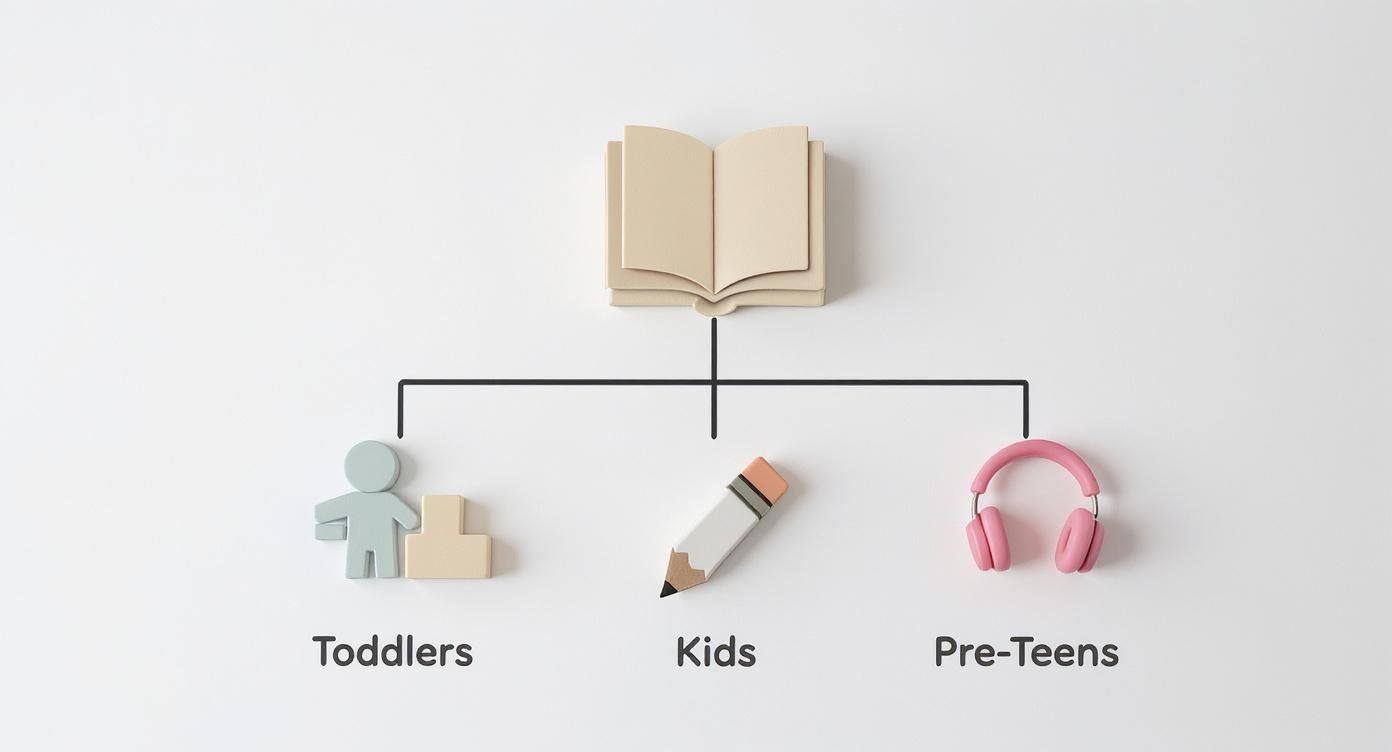
As you can see, the themes get a bit more complex as kids get older, moving from simple ideas about trying hard to deeper concepts like emotional resilience.
Modern Favorites for Today's Kids
Newer books have taken these classic themes and given them a fresh spin, tackling the kinds of challenges and feelings that modern kids face. These stories are fantastic because of their relatable characters and honest look at the messy parts of learning.
- The Most Magnificent Thing by Ashley Spires: A girl has an amazing idea for an invention, but actually building it is way harder than she thought. This book does an incredible job of showing the real frustration—and even anger—that comes with failing. It normalizes those big feelings and shows the value of taking a break before trying again.
- After the Fall by Dan Santat: Ever wonder what happened to Humpty Dumpty after he fell? This brilliant book tells that story. Humpty is terrified of heights, but he finds the courage to face his fear and transforms into something completely new. It’s a powerful metaphor for recovering from setbacks and finding strength you never knew you had.
These modern stories go beyond a simple "try, try again" message. They get into the emotional side of growth—the frustration, the fear, the self-doubt. That makes them incredibly useful for teaching emotional intelligence right alongside resilience.
Spotlight Recommendation: The Dreams of Phillip Aisling
For middle schoolers who are ready for a deeper dive, we can't recommend The Dreams of Phillip Aisling series enough. This fantasy adventure is basically a masterclass in growth mindset, all wrapped up in a thrilling story about a boy learning to control his dreams.
Phillip’s journey isn’t about instant magic. He doesn't just stumble upon a secret power; he has to work diligently to master the art of lucid dreaming. He fails over and over, confronts his deepest fears, and learns that every mistake is just part of the process. The series brilliantly shows that his progress comes directly from his willingness to learn from what went wrong.
What really makes this series stand out is its focus on internal growth. The biggest monsters Phillip faces aren't in his dreams—they're his own self-doubt and impatience. Readers get to watch him actively reframe his thinking, turning moments of pure frustration into opportunities to learn. This makes The Dreams of Phillip Aisling one of the most effective growth mindset books out there, because it models the tough inner work that builds real, lasting resilience.
Making the Lessons Stick Beyond the Last Page
Finishing one of the great growth mindset books for kids is a fantastic start, but the real magic happens after the cover closes. A good story plants the seed. It's up to us as parents and educators to help that inspiration grow into a lasting part of how our kids see the world. The goal is to move the ideas off the page and into their actions and inner voice.
This shift from reading to doing doesn’t have to feel like homework. It’s about building small, consistent habits that echo the book’s message. When you connect a character's journey to your child's own life, you’re helping them build a bridge between fictional struggles and their real-world experiences with school, sports, and friendships.

Spark Meaningful Conversations
Once you’ve finished reading, the easiest way to keep the lessons alive is just to talk. But instead of quizzing your child on plot points, try asking open-ended questions that get them thinking and making personal connections. These chats show them the themes in the book aren't just make-believe; they’re relevant to their own lives.
Here are a few questions that get the ball rolling:
- "What do you think the character could try next time they face that problem?" This gets them thinking strategically—a key skill for tackling any challenge.
- "Tell me about a time you felt frustrated like that character. What did you do?" This helps them connect the character’s emotions to their own, normalizing the tough feelings that come with learning something new.
- "If you could give the main character one piece of advice, what would it be?" This empowers your child to think like a mentor and solidifies their own understanding of growth mindset ideas.
- "Which part of the character’s journey reminded you of yourself?" This builds empathy and helps them see their own potential for growth mirrored in the story.
These aren't tests with right or wrong answers. The aim is to create a safe space for your child to explore their thoughts on effort, failure, and perseverance without judgment.
This kind of dialogue builds what’s known as metacognition, which is just a fancy way of saying "thinking about your own thinking." It’s a crucial skill that helps kids become more aware of how they learn, letting them adjust their strategies when they get stuck.
Bring the Concepts to Life with Activities
Hands-on activities are a brilliant way to make abstract ideas like "resilience" and "perseverance" feel real and fun. They create powerful memories and even physical reminders of the growth mindset principles you’re trying to encourage. With a few simple projects, you can turn your home or classroom into a place that celebrates the journey of learning, mistakes and all.
Here are two practical ideas you can start today:
- Create a "Fantastic Failures" Jar: Grab an empty jar and some slips of paper. Whenever someone in the family makes a mistake—big or small—they write down what happened and, most importantly, what they learned from it. Every so often, read the slips aloud to celebrate the awesome lessons that only come from trying and failing. It completely reframes failure from something to hide into a badge of honor.
- Design a "Power of Yet" Poster: Get a big piece of poster board and write "Things I Can't Do… YET!" at the top. When your child is wrestling with a new skill, like tying their shoes or mastering a tricky math concept, add it to the poster. Once they nail it, they get to triumphantly move it to a "Things I Can Do NOW!" section. This visual tracker makes their progress impossible to ignore and hammers home the powerful idea that abilities aren't fixed—they grow over time.
Your Growth Mindset Parenting Toolkit
The real magic happens when the lessons from a story leap off the page and into everyday life. But continuing that journey doesn't have to be a solo mission.
Think of this as your hub for keeping the growth mindset conversation going. We've pulled together some of our best resources to help you reinforce these powerful ideas as your child grows and takes on new challenges.
Explore and Learn More
Building a resilient, challenge-loving kid is a marathon, not a sprint. To help you along the way, we’ve gathered some of our favorite content.
- Our Companion Podcast: Tune in for great discussions with child development experts and authors who dig into the themes found in the best growth mindset books for kids.
- The Blog: Find a whole library of articles packed with practical tips—from how to praise the process to turning everyday mistakes into awesome learning opportunities.
- The Newsletter: Subscribe for a regular dose of inspiration, curated reading lists, and family activities delivered right to your inbox.
Your goal is to create a home environment where effort is celebrated, challenges are welcomed, and the phrase "I can't do it" is always followed by a confident "…yet."
A Special Thank You
To help you put these ideas into practice right away, we wanted to offer you an exclusive discount. As a thank you for reading, we're giving you 20% off your purchase of The Dreams of Phillip Aisling series.
This adventure is the perfect next step, showing middle-grade readers exactly what perseverance looks like through a story they won't want to put down. Let's continue building a generation of confident, resilient learners together.
Frequently Asked Questions About Growth Mindset
Even with the best books and intentions, putting growth mindset into practice can bring up some thorny real-world questions. It’s one thing to read about resilience, but it’s another thing entirely to navigate a real-time meltdown over frustrating homework. This section tackles some of the most common questions parents and educators have.
Our goal here is to give you practical, in-the-moment strategies to handle those tough spots and reinforce a growth mindset when it matters most.
What if my child gets frustrated and gives up anyway?
This is completely normal and expected. The goal of a growth mindset isn't to prevent frustration, but to teach kids how to manage it. When they want to quit, the first and most important step is to validate their feelings.
Try saying something like, "I can see this is really frustrating you. It's okay to feel that way. Let's take a quick break and come back to it with fresh eyes." This simple move does two things: it shows them their feelings are valid, and it models a crucial problem-solving strategy—taking a break. Sometimes, the most productive step forward is stepping away for a minute.
How do I praise effort without sounding fake?
Authenticity is everything. Kids have a built-in radar for forced praise, and if it feels phony, they'll tune it out. The trick is to be specific and focus on the process you actually observed.
Instead of a generic "Good job trying hard!", point to a specific action. Say, "I noticed you used three different strategies to solve that math problem. That's fantastic problem-solving!"
This shows you were paying attention and that you value their strategic thinking, not just their sheer persistence.
Here are a few simple swaps to make your praise more meaningful:
- Instead of: "You're so smart!"
- Try: "The way you organized your research for that report was so thoughtful."
- Instead of: "Great job on your drawing!"
- Try: "I love the way you experimented with different colors to get the sky just right."
This focus on concrete actions makes your praise stick. It connects their effort directly to their progress, making the core lesson of growth mindset books for kids a real, tangible part of their daily life.
Ready to put these ideas into action with a story your child will love? The Dreams of Phillip Aisling Series is a middle-grade fantasy adventure that masterfully weaves themes of perseverance and learning from mistakes into a thrilling narrative. Start the journey today and watch the lessons of resilience come to life.
Explore the series at https://phillipaisling.com.